.webp) Online
OnlineNot sure which channel fits your business?View all services →
Three inputs. Instant KPIs. No spreadsheets.Open a calculator →
OnlineIn 2026, mobile devices drive a massive 83% of landing page traffic, yet desktop users still convert at a 35% higher rate. This discrepancy highlights a critical leak in your digital strategy that bid adjustments alone cannot bridge. If you're searching for how to improve landing page conversion rat...

In 2026, mobile devices drive a massive 83% of landing page traffic, yet desktop users still convert at a 35% higher rate. This discrepancy highlights a critical leak in your digital strategy that bid adjustments alone cannot bridge. If you're searching for how to improve landing page conversion rate for ppc, you must look beyond the Google Ads dashboard. The real issue is almost always the "continuity problem," where the specific promise made in your ad creative fails to manifest the moment a user lands on your site.
It's exhausting to pay an average of $5.42 per click only to see your budget disappear into a 6.6% median conversion rate. You need a lower Cost Per Acquisition and a higher Quality Score, but the disconnect between user intent and the post-click experience stands in your way. This guide shares our data-driven conversion framework to help you turn expensive clicks into profitable customers. We'll examine technical optimizations for the Google Ads API v24.2 era and show you how to build a predictable, scalable lead flow that finally outperforms industry benchmarks.
• Identify the "PPC Leak" and learn how fixing the disconnect between paid traffic and landing page experience reduces budget waste.
• Master the Continuity Principle to ensure your ad copy and visual branding align perfectly with your landing page hero section.
• Learn how to improve landing page conversion rate for ppc by removing technical friction and implementing psychological trust signals.
• Explore the 2026 CRO framework, utilizing AI-driven personalization and session recordings to optimize user journeys in real-time.
• Understand why the synergy between professional CRO and PPC management is the key to achieving a predictable and scalable return on investment.
The PPC Leak is the silent killer of digital growth. It represents the measurable gap between a paid click and a completed business action. In 2026, the median landing page conversion rate across all industries sits at 6.6%. If your performance lingers at this average, you're likely overpaying for every acquisition. Top-tier advertisers, the top 25%, are converting at 11.45% or higher. When you investigate how to improve landing page conversion rate for ppc, you aren't just tweaking a headline; you're fixing a structural failure in your sales funnel.
Three main culprits drive this leak. Technical friction, such as slow load times on mobile, creates immediate bounce. Poor message match breaks the psychological contract between the ad and the page. Finally, a weak value proposition fails to give the user a compelling reason to act. Addressing these requires a systematic approach to Landing page optimization (LPO) that treats the post-click experience as a continuation of the ad itself.
Google Ads doesn't just charge you for clicks; it rewards or penalises you based on the landing page experience. When your conversion rate is low, Google assigns a lower Quality Score to your keywords. This directly inflates your Cost Per Click (CPC), which currently averages $5.42 across search ads. Low conversion rates make scaling impossible. If your funnel is leaky, "buying more traffic" is a losing strategy that only accelerates budget depletion without improving your bottom line.
You can't fix what you haven't measured. Use GA4 and Google Ads data to identify exactly where users drop off. Look for the "PPC-to-Page Ratio," which we define as the correlation between ad-click intent and specific landing page engagement metrics. This KPI is essential for diagnostic performance in 2026. Distinguish between "hard" conversions, like completed sales, and "soft" conversions, such as lead magnet sign-ups or newsletter subscriptions. Hard conversions pay the bills, but soft conversions provide the data points needed to optimize the user journey for long-term profitability.
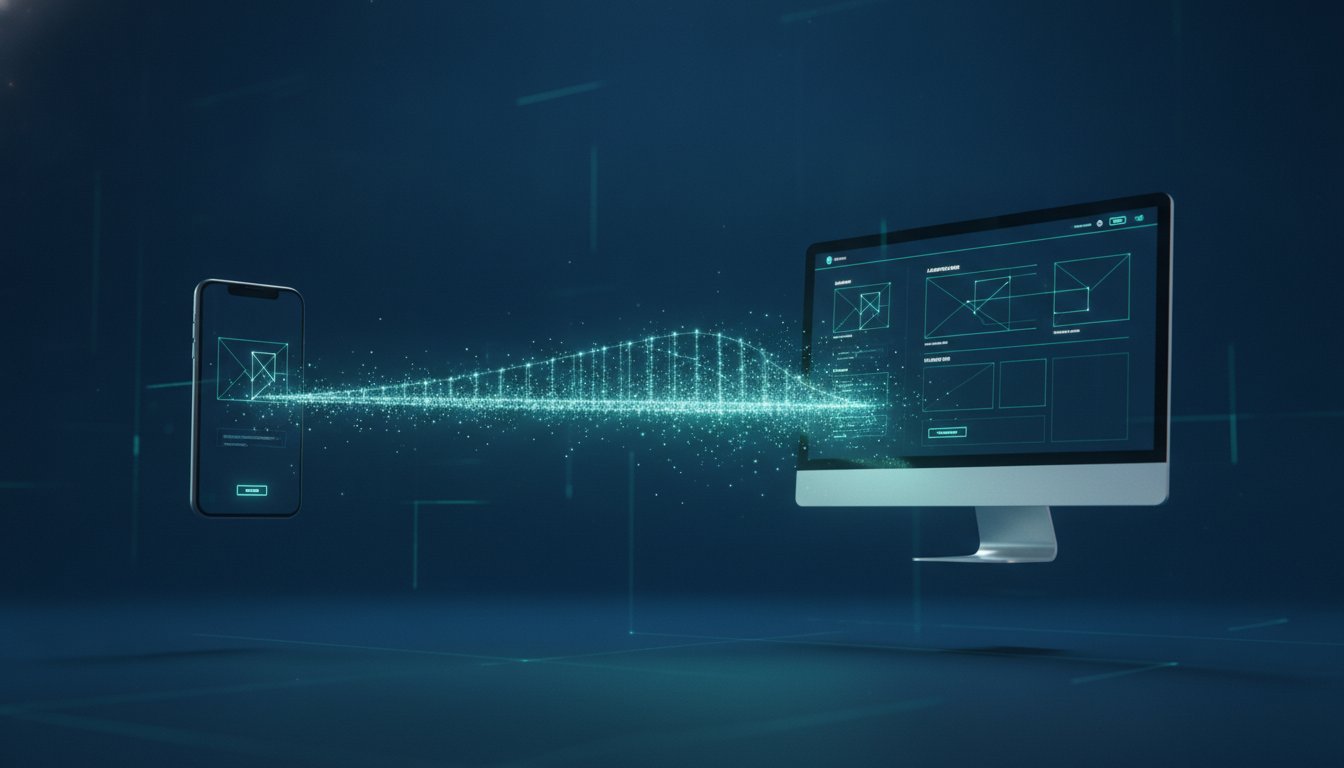
Message match is the psychological glue that binds your ad creative to your conversion goal. When a user clicks your ad, they've made a split-second decision based on a specific promise. If your landing page fails to mirror that promise immediately, the visitor bounces. Understanding how to improve landing page conversion rate for ppc requires a deep dive into the Continuity Principle. This isn't just about repeating keywords; it's about maintaining visual and textual harmony throughout the entire click-through journey.
Visual continuity is often overlooked but remains a powerful conversion driver. If your Google Display or Meta ad features a specific product image or a particular brand colour palette, the landing page hero section must reflect those exact elements. Any visual dissonance creates instant friction. By leveraging Data-Driven Insights, we know that users subconsciously look for these cues to confirm they haven't been misled by a "bait and switch" tactic. Every element on the page should reinforce the decision the user made when they clicked the ad.
A visitor must know they are in the right place within five seconds. Your headline shouldn't be clever; it should be a mirror. If your ad targets "emergency boiler repair Glasgow," your landing page headline must contain those exact words. We recently saw this in action with a Glasgow-based retailer. By simply aligning their hero headlines with high-intent PPC keywords, they achieved a 22% increase in ROI within a single quarter. This success wasn't due to a design overhaul, but rather a strict adherence to keyword-to-headline mapping.
Intent alignment is the final piece of the bridge. You cannot treat informational searches the same as transactional ones. Sending high-intent PPC traffic to your homepage is a guaranteed conversion killer in 2026. The homepage is too broad and lacks the specific focus required to close a sale. Instead, use dedicated landing pages that match the searcher's stage in the buying funnel. Transactional keywords need direct, action-oriented pages, while informational queries require educational content that builds trust before asking for a sale.
For high-volume accounts, manual alignment is often impossible. This is where dynamic text replacement (DTR) becomes essential. DTR allows you to personalise the page experience at scale by automatically swapping out headlines and subtext based on the user's search query. This level of precision ensures that every visitor feels the page was built specifically for them. If your current setup lacks this level of cohesion, you might need a professional digital strategy to bridge the gap between your ad spend and your revenue goals.
Every millisecond of delay acts as a tax on your ad spend. While mobile devices now drive 83% of landing page traffic in 2026, desktop users still convert at a 35% higher rate. This performance gap is frequently the result of technical friction that frustrates high-intent users. If you're investigating how to improve landing page conversion rate for ppc, you must prioritise the removal of these invisible barriers. Reducing cognitive load and streamlining the path to action are not just design choices; they're financial imperatives that directly impact your bottom line.
Google's auction system factors in landing page experience through Core Web Vitals. Largest Contentful Paint (LCP) is particularly critical for PPC. If your hero image or primary value proposition takes too long to load, your Quality Score drops and your CPC rises. Mobile optimization must also account for "The Thumb Zone." This means ensuring that primary CTAs are easily reachable during one-handed browsing. Secure, HTTPS-encrypted pages are a baseline requirement. Without them, modern browsers flag your site as unsafe, terminating the user journey before it begins. Documented performance data shows that a 1-second delay in page load can cost up to 20% in total conversions.
Friction isn't always technical; it's often psychological. Users need constant reassurance that they're making a safe choice. Strategic placement of reviews, accreditations, and UK-specific trust marks near the CTA can lower "buyer’s remorse" in real-time. This is where conversion rate optimization transforms from a technical exercise into a brand-building tool. Reassurance copy, such as "No credit card required" or "GDPR compliant," directly addresses user anxieties at the point of decision.
Form length also dictates your success. Data from 2026 reveals that single-field forms convert at an average of 13.4%, while forms with nine fields plummet to a 3.6% conversion rate. If your business model requires extensive data collection, you should use multi-step "micro-conversions." Breaking a long form into smaller, digestible steps maintains momentum and reduces the perceived effort. Simplifying the path to the "Buy" or "Enquire" button ensures that the energy generated by your ad isn't lost to a complex or intimidating interface.
Only ask for essential data to keep conversion rates high.
Ensure your main content loads in under 2.5 seconds.
Break complex tasks into small, low-friction steps.
Place partner logos and security badges near the final action button.

In the 2026 PPC landscape, a static landing page is a liability. As ad platforms move toward broader, AI-driven targeting, your landing page must work harder to filter and convert that traffic. Understanding how to improve landing page conversion rate for ppc now requires an iterative framework that combines quantitative data with predictive AI. We no longer rely on gut feelings or aesthetic preferences. Instead, we use a continuous cycle of testing and refinement to ensure every ad pound delivers maximum utility.
The shift toward privacy-first optimisation has changed the rules. With third-party cookies largely obsolete, first-party data collected directly on your landing pages is your most valuable asset. Modern CRO frameworks prioritise "zero-party" data collection through interactive elements, allowing you to personalise the user journey without infringing on privacy standards. This iterative process ensures your page evolves alongside shifting market trends and user expectations.
Successful testing begins by identifying "Big Rock" variables. Don't waste time testing button colours; focus on the elements that move the needle: headlines, primary offers, and hero imagery. To achieve statistical significance, you need sufficient traffic volume. In a high-competition auction, making decisions based on small sample sizes leads to false positives. For those looking to implement these strategies, using the right A/B testing tools is essential for maintaining data integrity and ensuring your results are actionable.
Quantitative data tells you what is happening, but qualitative data explains why. Heatmapping and session recordings allow us to see exactly where PPC visitors get stuck or lose interest. By analysing drop-off points in your digital marketing funnel, you can identify friction points that GA4 might miss. AI-driven heatmaps predict user attention in 2026 by simulating eye-tracking patterns before a single visitor even lands on the page. This predictive capability allows us to pre-optimise layouts for maximum impact, ensuring your most important information sits exactly where users naturally look.
Our methodology focuses on turning these insights into measurable business growth. If your current landing pages aren't reflecting these technological shifts, you're likely leaving revenue on the table. Our team can help you implement a professional Conversion Rate Optimization strategy that bridges the gap between expensive clicks and profitable customers.
Use AI-driven personalisation to serve different content to different audience segments.
Use AI heatmaps to audit your visual hierarchy before launching new campaigns.
Use short surveys or interactive tools to learn more about your visitors.
Focus your experimentation budget on high-impact elements like your core offer.
Professional Conversion Rate Optimization (CRO) is not an additional expense; it's a strategic investment that pays for itself by reducing your Cost Per Acquisition (CPA). While many advertisers focus exclusively on bid adjustments and keyword pruning, the most significant gains happen after the click. If you master how to improve landing page conversion rate for ppc, you gain the ability to outbid competitors who are still struggling with high bounce rates and inefficient funnels. This creates a powerful synergy between PPC Management and page performance. One discipline drives the high-intent traffic, while the other ensures that traffic generates measurable business value.
Local expertise remains a critical factor for success in the UK market. A PPC agency in Glasgow understands the specific cultural nuances and search behaviours that global templates often miss. At Behaviour Digital, we don't rely on generic best practices. We use quantitative data to align your landing pages with the specific expectations of your target audience. This results in a more predictable and scalable lead flow that allows you to increase your ad spend with confidence.
The "Opportunity Cost" of unoptimised ad spend is often higher than the cost of professional services. If you're spending thousands each month on clicks that don't convert, a minor percentage increase in your conversion rate can yield a higher ROI than simply increasing your budget. Behaviour Digital integrates CRO into every paid campaign strategy. We treat your ad spend as a shared responsibility, acting as a strategic partner rather than a mere service provider. Our focus is on the long-term sustainability of your digital growth through continuous methodological refinement.
Before scaling your budget, you must ensure your landing page is ready for increased volume. You can perform a simple 3-step audit today. First, compare your mobile and desktop conversion rates in GA4 to identify technical friction. Second, verify that your hero headline matches your top-performing ad copy word-for-word. Third, audit your "PPC-to-Page Ratio" to ensure your content depth matches the searcher's intent. If these elements are not aligned, your campaigns will never reach their full potential.
Is your landing page ready for a budget increase? Use this final checklist to verify your 2026 strategy:
Does the page immediately mirror the promise made in your ad?
Is your Largest Contentful Paint (LCP) under 2.5 seconds on mobile?
Are reviews and UK-specific trust marks visible near the CTA?
Have you minimised fields or implemented a multi-step flow?
We invite you to stop guessing and start growing based on quantitative evidence. Get a data-driven PPC and CRO strategy from Behaviour Digital and discover how to improve landing page conversion rate for ppc through professional, results-oriented management. Our Glasgow-based team is ready to help you bridge the gap between expensive clicks and profitable customers.
The digital auction environment is now too competitive to ignore the structural impact of the "PPC Leak." Sustainable growth requires a relentless focus on message match continuity and technical performance. You've seen how a single second of mobile delay can erode 20% of your conversions and how AI-driven frameworks now predict user attention with surgical precision. Mastering how to improve landing page conversion rate for ppc is the only way to ensure your ad spend translates into predictable, high-intent lead generation rather than wasted clicks.
The synergy between precise ad management and continuous CRO creates a scalable growth engine. It's about moving beyond static pages and embracing an iterative, data-backed approach that adapts to real-time user behaviour. As Glasgow-based specialists with a proven track record in increasing ROI, we're ready to transform your performance metrics into measurable business value. We focus on the quantitative facts that drive your bottom line, ensuring every pound of ad spend works harder for your brand.
Optimise your PPC performance with Behaviour Digital and let's build a strategy that consistently outperforms industry benchmarks. Your success is the result of a conscious strategy and constant methodological refinement. Let's start scaling your results today.
The median landing page conversion rate across all industries is currently 6.6% based on Q4 2024 data used for 2026 benchmarks. High-performing pages in the top 25% achieve rates of 11.45% or higher. When analyzing how to improve landing page conversion rate for ppc, your target should be to exceed your specific industry average rather than chasing a generic number.
Investment levels depend on the complexity of the funnel and whether the project requires a one-time technical audit or ongoing multivariate testing. Small businesses should focus on the cost of inaction. Budget leakage from unoptimised pages often exceeds the professional fees required to fix them. A strategic approach ensures the investment is recovered through a significantly lower Cost Per Acquisition.
You can, but using a standard homepage or service page is often a conversion killer. Existing website pages usually contain too many distractions, such as navigation menus and external links, which dilute user focus. Dedicated landing pages that mirror ad copy provide the specific continuity required to turn a click into a lead. This remains a fundamental step in how to improve landing page conversion rate for ppc.
Technical improvements, such as increasing page load speed, can yield immediate improvements in bounce rates and Quality Scores. However, psychological optimisations and A/B tests typically require two to four weeks to reach statistical significance. The exact timeline depends on your daily traffic volume. You need enough data points to ensure that performance gains are mathematically valid rather than results of random chance.
Yes, landing page speed is a primary component of the Landing Page Experience metric within Google Ads. Google uses Core Web Vitals, specifically Largest Contentful Paint (LCP), to determine how well your page serves the user. Slow pages lead to lower Quality Scores, which directly increases your average Cost Per Click. Improving speed is one of the fastest ways to lower your overall ad spend.
A/B testing compares two completely different versions of a page or tests a single variable, such as a headline, to see which performs better. Multivariate testing evaluates multiple variables simultaneously, such as the headline, hero image, and CTA button. This allows you to see how different elements interact with each other. Multivariate testing requires significantly higher traffic volumes to produce reliable, actionable data.
Landing page builders offer speed and agility, which is ideal for rapid testing and deployment. Custom-coded pages provide superior control over technical performance and Core Web Vitals, which can benefit your Quality Score. The choice depends on your priorities. If you need to test multiple offers quickly, a builder is efficient. If you want maximum technical optimization for high-spend campaigns, custom code is often better.
Accurate tracking in 2026 requires the implementation of Google Consent Mode and server-side tracking. As third-party cookies have been phased out, you must rely on first-party data and the Data Manager API to send event data directly to your analytics. This ensures you remain compliant with GDPR and other privacy standards while maintaining the granular data needed to optimize your PPC ROI and campaign performance.
Luke leads strategy across every Behaviour Digital account — building data-driven advertising systems for ambitious brands. When he's not auditing ad accounts, he's writing about what he found in them.
Get a free, tailored growth plan — we'll run our framework on your accounts and show you exactly what we'd do.
Get your free growth plan →