 Online
Not sure which channel fits your business?View all services →
Three inputs. Instant KPIs. No spreadsheets.Open a calculator →
OnlinePeople now find brands across Google, ChatGPT, YouTube, TikTok, Instagram and Reddit. Here's what that means for how you show up, and where to start.
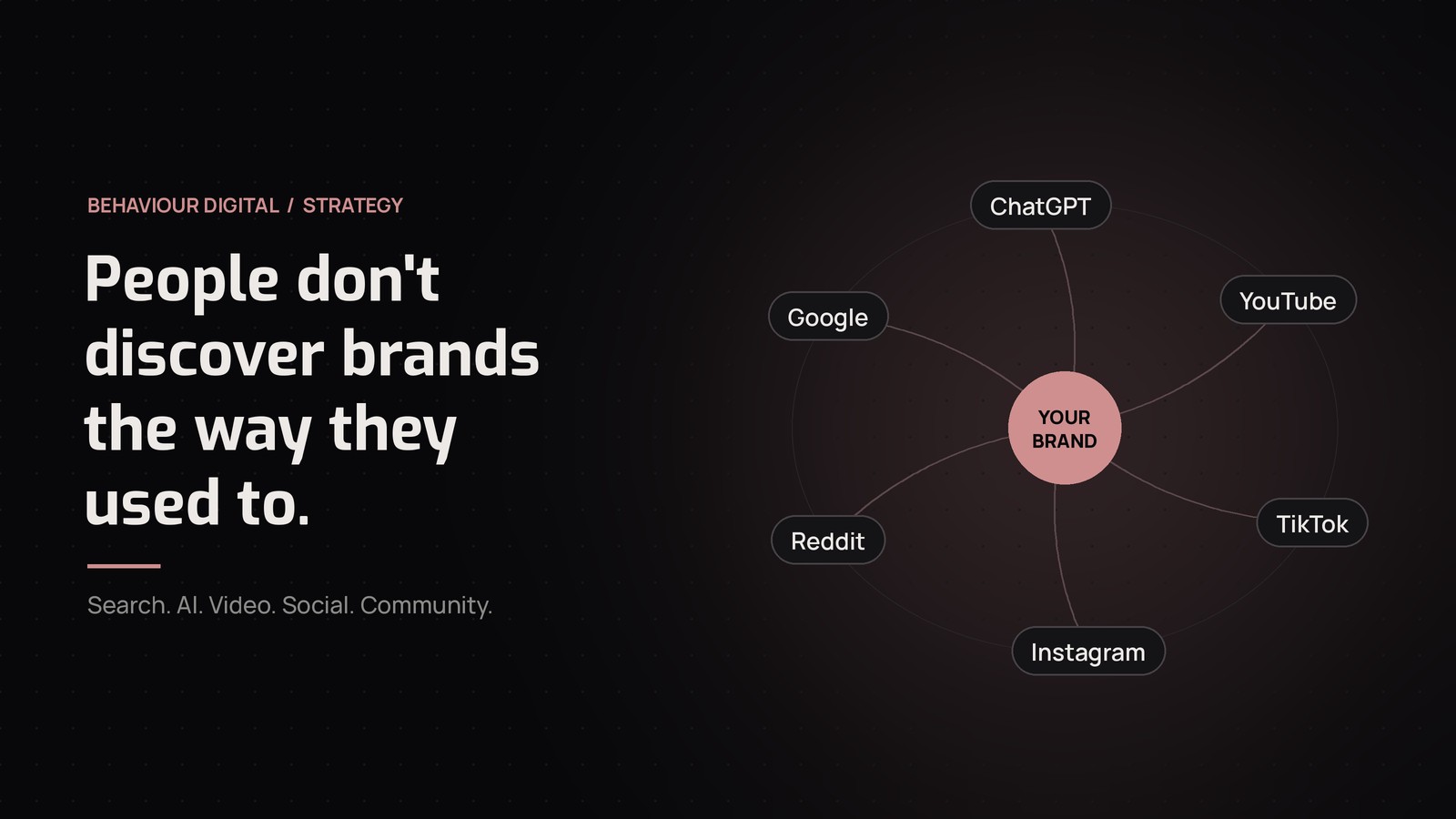
People don't discover brands the way they used to.
They're searching on Google. They're asking ChatGPT. They're watching YouTube reviews. They're finding products on TikTok, Instagram and Reddit.
Often, they're doing all of it before they ever land on your website. By the time someone clicks through, they've already formed an opinion about you, your competitors and whether you're worth the money. The question isn't whether you're being discovered across these channels. It's whether you're showing up in the right way when it counts.
For years, marketing was built around a tidy, linear journey. Someone sees an ad, visits your site, maybe comes back once or twice, then buys. You could map it, measure it and optimise each stage.
That journey hasn't disappeared, but it now sits inside something much messier. A customer might:
Every one of those moments shaped the decision. Only the last one is likely to get the credit in your reports.
People are doing more research than ever, especially for considered or premium purchases. They want reassurance. They want to hear from people like them. And they're moving between platforms freely to get it.
The mistake many brands make is treating these channels as interchangeable places to push the same message. They aren't. Each one serves a different need in the buyer's head.
Google is where intent shows up. People search when they know what they want, or when they want to check you're legitimate. If you're not visible here, you're handing ready-to-buy customers to someone else.
ChatGPT and other AI assistants are where people go to shortcut research. They ask for comparisons, recommendations and "what's best for me" advice. What gets said about you across the web shapes what gets said here.
YouTube is where people go to be convinced. Reviews, demos and unboxings let buyers see a product properly before they spend. It's the closest thing to trying something in store.
TikTok and Instagram are where discovery happens by accident. Most people aren't looking for you. They're entertained into noticing you, which means the creative has to earn attention before it can sell.
Reddit is where people go for the truth. It's unfiltered and sceptical, and buyers trust it precisely because it isn't polished. If people are talking about your category there, they're forming opinions about your brand whether you're involved or not.
Put simply: people use different platforms to discover, to compare, to validate and to decide. Your marketing needs to meet them at each of those moments with the right message.
You don't need to be everywhere at once. You need to understand how your customers actually behave, then show up where it matters most. Here's where we'd start.
Before choosing platforms, understand why people buy from you. What triggers the search? What worries them? What do they need to see before they trust you? Those answers tell you which channels matter and what to say on each.
A TikTok ad and a Google search ad should never say the same thing. Discovery content needs to stop the scroll. Search ads need to answer the question that was just asked. Retargeting needs to remove the final doubt. Same brand, different job.
Reviews, creator content, testimonials and genuine conversations all feed the research phase. If a buyer goes looking for reassurance, make sure there's something worth finding, on your site and off it.
Google, Meta, YouTube and TikTok shouldn't be run as separate silos with separate goals. When they're planned together, discovery activity feeds search demand, and search captures the people your social ads warmed up.
If you only fund the channel that gets the final click, you'll slowly starve the ones that created the demand in the first place. Judge performance across the whole journey, and watch for signals like rising branded search when you invest in awareness.
The platforms will keep changing. A new one will appear, an old one will fade, and the algorithms will shift again. What doesn't change is human behaviour. People want to discover things that feel relevant, find proof they can trust and buy with confidence.
The brands that grow are the ones that understand that, and build their marketing around how people really make decisions rather than how a report says they do.
That's what we do at Behaviour Digital. We look at why your customers buy, where they're making up their minds, and how your paid media can meet them there.
Spending £5k+ a month on ads? Book a free ad spend review and we'll show you where your budget is working, where it isn't, and where the next opportunity sits.
Luke leads strategy across every Behaviour Digital account — building data-driven advertising systems for ambitious brands. When he's not auditing ad accounts, he's writing about what he found in them.
Get a free, tailored growth plan — we'll run our framework on your accounts and show you exactly what we'd do.
Get your free growth plan →